
"Can I apply to several funders for the same project, or is that considered cheating?"
This question keeps many charity leaders awake at night. You've got a brilliant project that needs £50,000, but most grants you find only offer £10,000-£15,000. The math seems simple - apply to multiple funders to make up the difference. But is this allowed? Ethical? Smart?
Let's cut through the confusion with an honest look at grant stacking - what it is, when it works, when it backfires, and how to do it right.
What Is Grant Stacking (And Why Everyone's Confused About It)
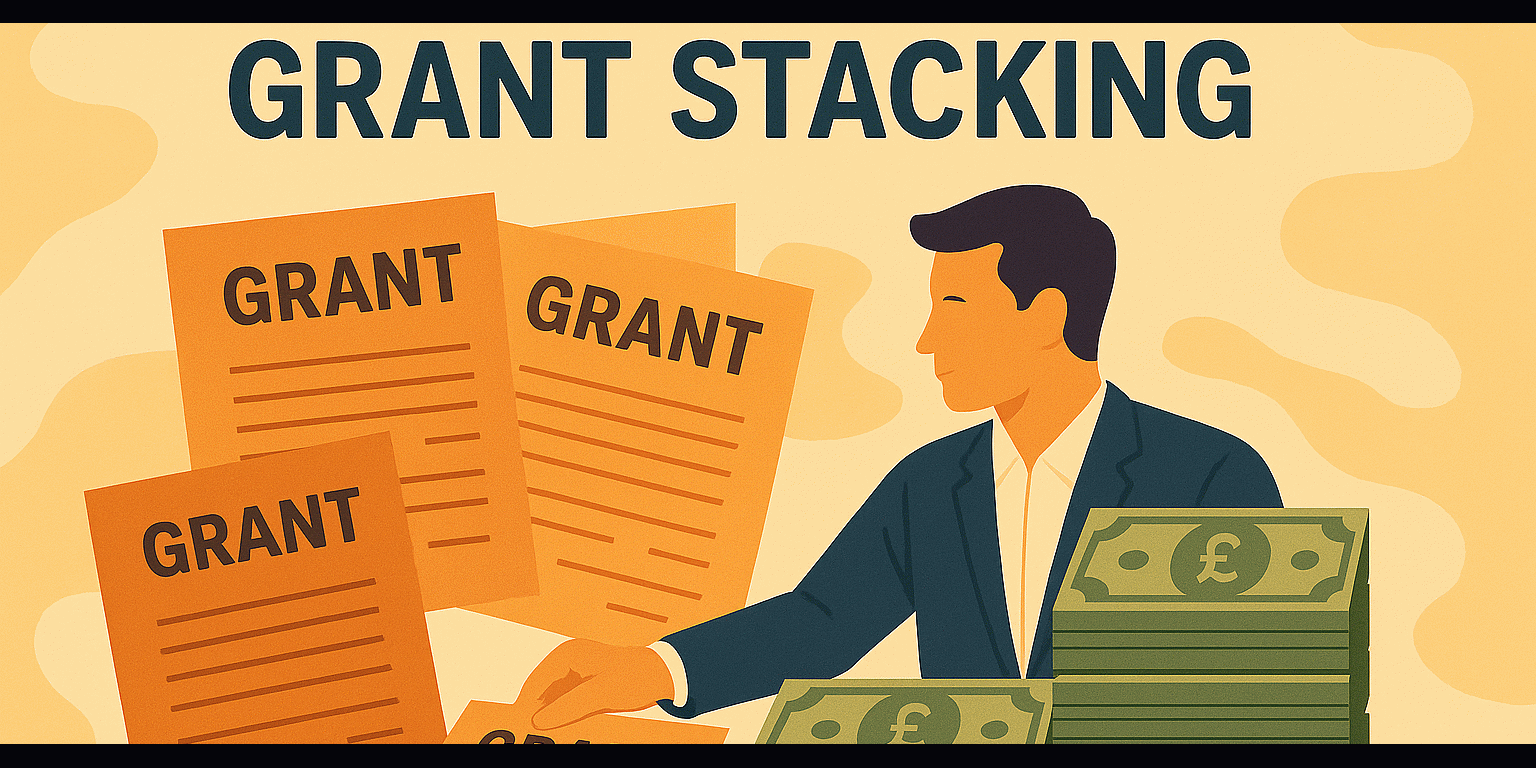
Grant stacking simply means securing funding from multiple sources for a single project. It's not only legal - it's often essential for larger projects and actively encouraged by many funders.
Common Grant Stacking Scenarios:
- A £60,000 community centre renovation funded by 4 different trusts
- A youth programme supported by local council, lottery funding, and corporate grants
- Equipment purchases split between multiple charitable foundations
- Multi-year projects with different funders covering different years
The Confusion Comes From:
- Lack of clear guidance from funders
- Fear of appearing "greedy" or unprofessional
- Misunderstanding disclosure requirements
- Conflating grant stacking with grant fraud
When Grant Stacking Is Not Only Allowed - But Expected
Funders Who Actively Encourage It
Major Lottery Funders:
Most explicitly state that they expect other funding sources and view applications more favourably when match funding is secured.
Government Grants:
Often require match funding as a condition of award - sometimes up to 50% of total project costs.
Corporate Funders:
Many prefer to be part of a funding consortium rather than sole funders, as it reduces their risk and increases impact visibility.
Community Foundations:
Regularly collaborate with other local funders and appreciate applications that show broad community support.
Projects That Almost Always Require Multiple Funders
- Capital projects over £25,000: Building work, major equipment purchases, facility renovations
- Multi-year programmes: Long-term projects requiring sustained funding
- Large-scale community initiatives: Projects serving multiple beneficiary groups
- Research projects: Often require diverse funding streams for different components
The Rules: What You Must Disclose (And When)
Always Disclose When:
- Application forms specifically ask: Most applications include questions about other funding sources
- You've already secured other funding: List confirmed grants and their amounts
- You're applying for the same costs: If two funders might pay for identical items
- Funders explicitly require it: Some have strict disclosure policies
What to Include in Your Disclosure:
- Names of other funders (applied to and confirmed)
- Amounts requested/secured
- What each funder will specifically cover
- Timeline of other applications and decisions
- Total project cost and remaining funding gap
Sample Disclosure Language:
"We are seeking £45,000 total for this project. We have confirmed £15,000 from (Funder A) for equipment costs and have applications pending with (Funder B) for £20,000 (staffing) and (Funder C) for £10,000 (running costs). Your grant would complete our funding package and allow the project to proceed."
When Grant Stacking Goes Wrong (And How to Avoid It)
The Cardinal Sins of Grant Stacking
1. Double-Dipping:
Asking multiple funders to pay for the exact same costs without disclosure.
Example: Requesting £5,000 for the same laptop from three different trusts.
2. Bait and Switch:
Getting funding approved then significantly changing what the money will fund.
Example: Securing £10,000 for "youth activities" then spending it on staff salaries.
3. Non-Disclosure:
Failing to mention other funding sources when directly asked.
Example: Leaving funding source questions blank or answering "none" when you have pending applications.
4. Over-Funding:
Securing more money than needed without informing funders.
Example: Getting £60,000 for a £45,000 project and keeping quiet about the surplus.
Real Consequences We've Seen:
- Grant offers withdrawn after discovery of undisclosed funding
- Organisations blacklisted from future applications
- Required to return funding already received
- Damaged reputation affecting all future fundraising
The Smart Way to Stack Grants
1. Plan Your Funding Mix Strategically
Break Down Your Project Costs:
- Staff costs: £20,000
- Equipment: £15,000
- Running costs: £8,000
- Evaluation: £2,000
- Total: £45,000
Match Funders to Cost Categories:
- Trust A (loves equipment): £15,000 for equipment
- Trust B (funds salaries): £20,000 for staff
- Local council: £8,000 for running costs
- Small foundation: £2,000 for evaluation
2. Time Your Applications Strategically
Phase 1: Apply to your strongest prospect first
Phase 2: Use initial success to strengthen subsequent applications
Phase 3: Apply to remaining funders with confirmed partial funding as leverage
Timeline Management:
- Allow 3-6 months between application deadlines
- Factor in decision timeframes (usually 3-4 months)
- Have backup funders identified in case of rejections
3. Create a Funding Tracker
Track for each funder:
- Application deadline and decision date
- Amount requested and for what specific costs
- Disclosure requirements and what you've told them
- Decision status and any conditions
- Reporting requirements if successful
What Funders Actually Think About Grant Stacking
What They Love to See:
- Transparent communication: Clear disclosure of all funding sources
- Strategic thinking: Well-planned funding mix that makes sense
- Reduced risk: Other funders validating your project's worth
- Sustainability planning: Multiple funders suggesting broad support
What Raises Red Flags:
- Vague cost breakdowns: Unable to specify what their money will fund
- Inconsistent stories: Different versions of the project to different funders
- Unrealistic timelines: Promising to start before funding is confirmed
- No contingency planning: What happens if other funding falls through?
The Questions Funders Wish You'd Ask
"What's your policy on match funding?"
Many funders prefer to be part of a funding consortium and will tell you this upfront.
"Do you collaborate with other funders?"
Some funders actively work together and can make introductions.
"What happens if we secure more/less funding than expected?"
Understanding flexibility helps you plan better.
"Can we acknowledge multiple funders in project materials?"
Most funders want recognition - understanding their requirements helps.
*Red Flags That Suggest You Shouldn't Stack*
- Funder explicitly states "sole funding only"
- Very small grants (under £2,000) where admin overhead isn't worth it
- Funders with conflicting values or missions
- Timeline conflicts that make delivery impossible
- Your organisation lacks capacity to manage multiple funder relationships
The Bottom Line: Best Practices for Ethical Grant Stacking
Do:
✅ Disclose all funding sources honestly and completely
✅ Create clear cost breakdowns showing what each funder covers
✅ Plan realistic timelines accounting for multiple decision processes
✅ Have contingency plans if some funding doesn't materialise
✅ Keep detailed records of what you've told each funder
Don't:
❌ Ask multiple funders for the same specific costs without disclosure
❌ Promise project start dates before funding is confirmed
❌ Assume funders won't communicate with each other
❌ Change project scope significantly without informing all funders
❌ Keep surplus funding without discussing with funders
Conclusion
Grant stacking isn't just acceptable - it's often essential for ambitious projects that create real impact. The key is doing it transparently, strategically, and ethically.
Most funders appreciate honest communication about your funding strategy. They'd rather support a well-planned project with multiple funding sources than gamble on being your only funder for something that might not happen.
Remember: funders want your project to succeed. By being transparent about your funding mix, you're actually helping them make better decisions and reducing their risk. That's not cheating - that's smart fundraising.
The most successful charities treat grant stacking as a strategic skill, not a necessary evil. Master it, and you'll unlock funding opportunities that seemed impossible when you thought you needed to find single funders for entire projects.